Hola — I’m Gabriela.
Your native Spanish teacher.
Before we talk about lessons, courses, or books — let me tell you a little about who you would be working with. Because when it comes to learning a language, the person teaching you matters more than anything else.
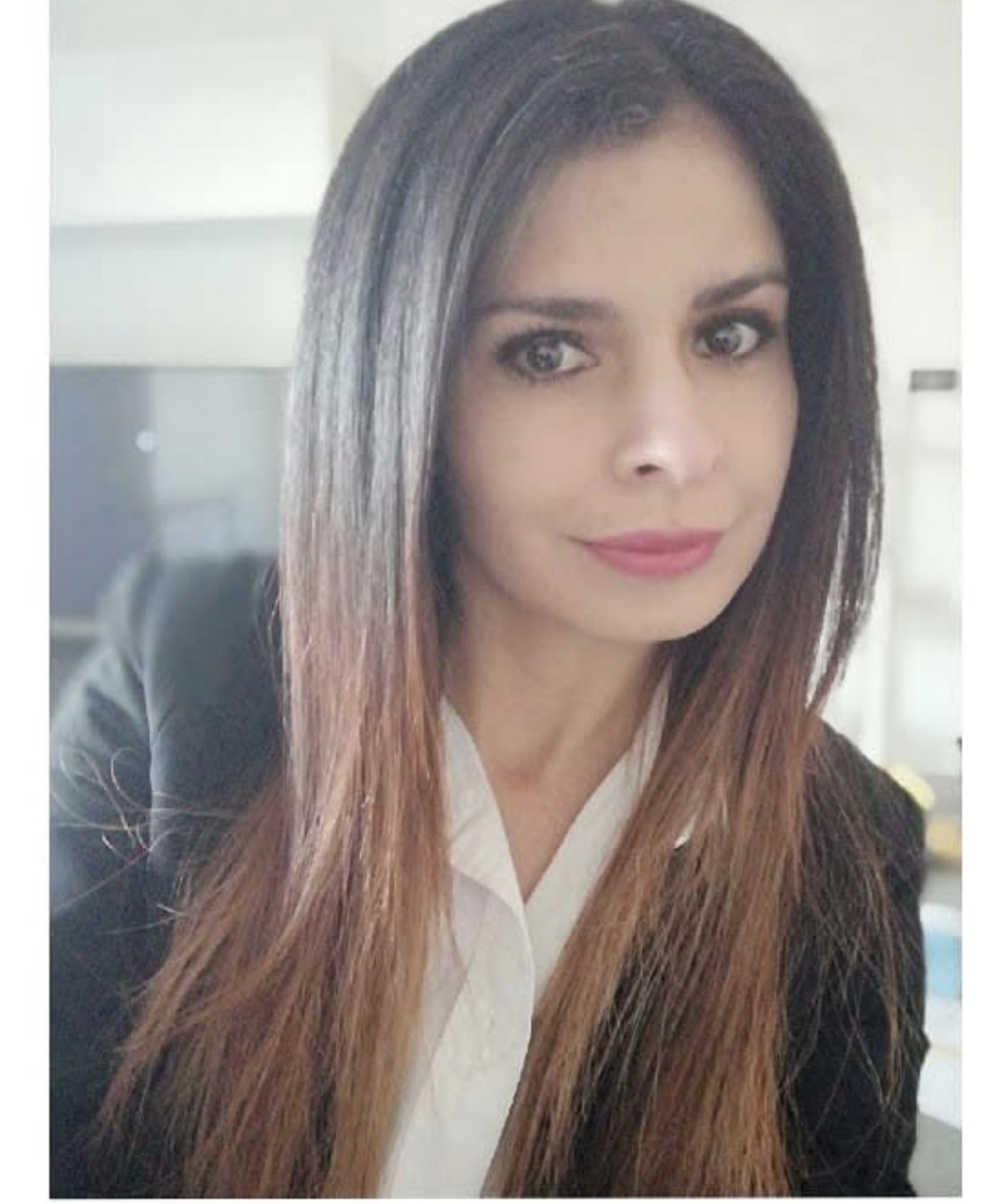
I was born and raised in Costa Rica in 1984 — a true Tica de pura cepa, as my grandmother used to say. I grew up surrounded by the warmth, humor, and color of Costa Rican Spanish long before I knew I would spend my life teaching it.
For over ten years I have been teaching Spanish as a second language to students from the United States and Europe — executives preparing for business in Latin America, teenagers heading to a year abroad, expats navigating daily life in a new country, and travelers who want to connect with locals in a way that no phrasebook ever quite manages.
I am also the author of Tico Talk, a guide to 101 essential Costa Rican Spanish words and phrases that is now available on Amazon Kindle. It was born from a simple observation: my students could conjugate verbs perfectly, but froze the moment a real Tico started speaking. The book — and my teaching — fix that.
Why Most People Never Actually
Learn to Speak Spanish
You have probably tried before. Maybe you downloaded the app, followed an online course, or sat through a semester of Spanish in college. You learned how to conjugate verbs. You memorized vocabulary lists. You passed the test.
And then you arrived in a Spanish-speaking country, opened your mouth — and nothing came out.
Sound familiar? You are not alone. And it is not your fault.
The truth is that most language learning methods were designed to teach you about Spanish — not to make you speak it. There is a fundamental difference between understanding grammar on a page and holding a real conversation with a real person who is speaking at full speed, using slang you have never heard, and expecting you to respond naturally.
That gap — between classroom Spanish and real-world Spanish — is exactly why SpanishFluent exists.
The Problem with Generic Language Learning
Apps are great for building a foundation. Courses can teach you structure. But neither can replace what happens in a live, personalized conversation with a native speaker who knows exactly where you are getting stuck and can correct you in real time.
Generic language programs treat every learner the same. They give you identical lessons whether you are a CEO preparing for meetings in Latin America, a teenager applying for a year abroad, or a traveler heading to Costa Rica next month. The result? You learn a version of Spanish that works on paper but fails in real life.
At SpanishFluent, the approach is completely different. Every student gets a custom lesson plan built around their specific goals, their current level, and the way they actually learn. If you are an executive, you work on business vocabulary, negotiation language, and professional communication. If you are a traveler, you focus on the phrases and cultural context that will make your trip genuinely transformative. If you are a parent enrolling your child, lessons are engaging, age-appropriate, and designed to build real confidence from day one.
What Makes a Native Teacher Different
There is a version of Spanish you learn from textbooks. And then there is the Spanish that people actually speak — and nowhere is the gap more dramatic than in Costa Rica.
Costa Rican Spanish, known as Tico Spanish, is one of the most distinctive dialects in all of Latin America. The slang is vivid and inventive. The expressions are deeply tied to local culture. Words like “pura vida,” “mae,” “tuanis,” and “diay” are used dozens of times a day — and none of them appear in a standard Spanish dictionary.
I grew up speaking this language around the kitchen table, at the corner pulpería, and watching La Sele play on Sunday afternoons. I did not learn it from a textbook. I lived it. And for more than ten years I have been teaching it — to executives, professionals, teenagers, and kids across the United States and Europe.
When you learn with a native teacher, you do not just learn the words. You learn the rhythm of the language. You learn when to be formal and when to relax. You learn the cultural nuances that make the difference between someone who speaks Spanish and someone who connects in Spanish.
Private Spanish Lessons Online — Who They Are For
The students who get the most out of private online lessons tend to fall into a few clear categories.
Executives and business professionals are perhaps the largest group. These are people who work with Latin American partners, manage teams in Spanish-speaking countries, or are expanding their business into new markets. For them, Spanish is not a hobby — it is a professional asset. One focused hour a week with a native teacher who understands the corporate context can produce results that years of generic study never achieved.
Travelers heading to Costa Rica or other Latin American destinations make up another significant group. These are people who do not just want to point at a menu — they want to have a real conversation with their taxi driver, order like a local at a soda, and understand what the surf instructor is actually saying. Even four or five sessions before a trip can be genuinely life-changing.
Parents enrolling their children represent a third and growing category. Research consistently shows that the earlier children are exposed to a second language, the more naturally they acquire it. Private lessons for teenagers and kids are structured very differently from adult sessions — more dynamic, more playful — but built on the same foundation of real, native-level instruction.
Expats and long-term residents of Spanish-speaking countries who find themselves surrounded by the language but struggling to break through to genuine fluency round out the picture. For these students, the focus shifts to the specific gaps holding them back — conversational confidence, regional vocabulary, or the cultural knowledge that turns a functional speaker into a truly fluent one.
The Tico Talk Book — Your Head Start
Before you book your first lesson — or alongside your lessons — there is one resource every student of mine recommends without hesitation: Tico Talk.
Tico Talk is a guide to 101 essential Costa Rican Spanish words and phrases, written by me and available on Amazon Kindle for $4.99. It is not a grammar textbook. It is not a generic phrase book full of sentences you will never use. It is a curated collection of the real words that real Costa Ricans use every single day, complete with phonetic pronunciation guides, real-world examples, and six authentic conversations set in places you will actually visit.
Students who read Tico Talk before their first lesson arrive with an immediate advantage — they already know how locals greet each other, what “pura vida” actually means in different contexts, and why you should never confuse “ahorita” with “ahora.” And students who read it without taking lessons still describe it as one of the most useful travel purchases they have ever made.
How to Get Started
Getting started at SpanishFluent is straightforward. There is no placement test, no lengthy enrollment process, and no minimum commitment. You book a session, you show up, and you speak Spanish.
Before your first lesson I take a few minutes to understand your starting point and what you want to achieve. From there I build a lesson plan specific to you. The first session itself is designed to be immediately useful — you will leave knowing things you can use the same day.
Sessions are conducted via Zoom, run 60 minutes, and are available at $50 per session with no subscription required. Scheduling is flexible across US and European time zones, and session notes are sent after every class.
¡Hasta pronto, mae!
— Gabriela Rivera
Frequently Asked
Questions
Everything you need to know before booking your first private Spanish lesson.
At SpanishFluent, private one-on-one Spanish lessons are $50 per session. Each session lasts 60 minutes and is conducted via Zoom. There is no subscription, no enrollment fee, and no minimum number of sessions required. You pay per lesson and book as many or as few as you need. Most students find that one or two sessions per week produces strong, consistent progress.
No. SpanishFluent welcomes students at every level, from complete beginners with zero Spanish experience to intermediate speakers looking to break through to genuine fluency. Before your first lesson, Gabriela will ask a few questions to understand your starting point and design the lesson plan accordingly. There is no placement test and no requirement to prepare anything in advance.
Costa Rican Spanish — known as Tico Spanish — is one of the most distinctive dialects in Latin America. While the grammar is standard Spanish, the vocabulary, slang, and expressions are uniquely Costa Rican. Words like “tuanis” (cool), “mae” (dude), “diay” (an all-purpose exclamation), and “pura vida” are used constantly in everyday conversation but rarely appear in standard Spanish courses. Gabriela’s book Tico Talk covers this vocabulary in full.
Most adult students who take one or two private sessions per week reach a basic conversational level within two to three months. Students who supplement their lessons with daily practice — watching Spanish content, reading, or using vocabulary apps between sessions — tend to progress significantly faster. The key is consistency and speaking from the very first lesson, which is exactly what private instruction allows.
Yes. SpanishFluent offers private Spanish lessons for teenagers and younger students as well as adults. Lessons for younger learners are structured differently — more dynamic, visual, and playful — but built on the same foundation of native-level instruction. Parents who want to learn alongside their children can also arrange combined sessions. Visit the Teens and Kids page for more details.
Yes, and it is one of the most popular services at SpanishFluent. Business Spanish lessons focus on meeting language, presentations, negotiations, email correspondence, and the cultural context that makes the difference between communicating correctly and communicating effectively. Gabriela has been teaching business Spanish to executives and managers in the US and Europe for over ten years. See the Business Spanish page for more information.
Every lesson begins with a brief review of the previous session and any questions you have. The main part is built around your specific goals — practicing a business presentation, working through conversational scenarios, studying vocabulary in context, or reviewing grammar through real conversation. Every session ends with a short summary and suggestions for practice before the next class. Notes are sent by email after the lesson so you can review at your own pace.
Tico Talk is a guide to 101 essential Costa Rican Spanish words and phrases, written by Gabriela Rivera and available on Amazon Kindle for $4.99. It covers authentic slang, pronunciation, real-life conversations, and cultural context you will not find in a standard Spanish course. The book is not a requirement for lessons — it works perfectly as a standalone resource for travelers — but many students find it a valuable complement to their sessions. Get it on the Tico Talk book page.
Every first lesson at SpanishFluent is effectively a trial. There is no minimum commitment and no enrollment contract. You book one session, experience the teaching approach firsthand, and decide from there whether to continue. The vast majority of new students book their second session before the first one ends. To get started, visit the contact page or send an email to gabriela@spanishfluent.com.
For one-on-one instruction with a native teacher, research — and the experience of thousands of students — consistently shows that online lessons are just as effective as in-person ones, and often more so. Without the need to commute, students tend to show up more consistently. The Zoom format also makes it easy to share documents and review notes in real time. The most important variable in language learning is not where you sit — it is the quality of the instruction and the consistency of the practice. Both are fully present at SpanishFluent.
Read, learn, and explore
Costa Rica and the Spanish language.
Articles written by Gabriela — a native Costa Rican teacher — about how to learn Spanish, live in Costa Rica, and do business in Latin America.
Learn Spanish
View all →Travel Costa Rica
View all →Life in Costa Rica
View all →Spanish for Business
View all →Spanish for Kids & Families
View all →Teacher Tips & Resources
View all →More than 30 articles — on Spanish, Costa Rica, business, and the life in between.
Leggi tutti gli articoliLearn Spanish with a
native Costa Rican teacher.
One-on-one lessons designed around your goals — whether you are preparing for a trip, building business relationships in Latin America, or raising bilingual children. Every session is tailored. Every session moves you forward.
Zoom · Adults, teens & kids
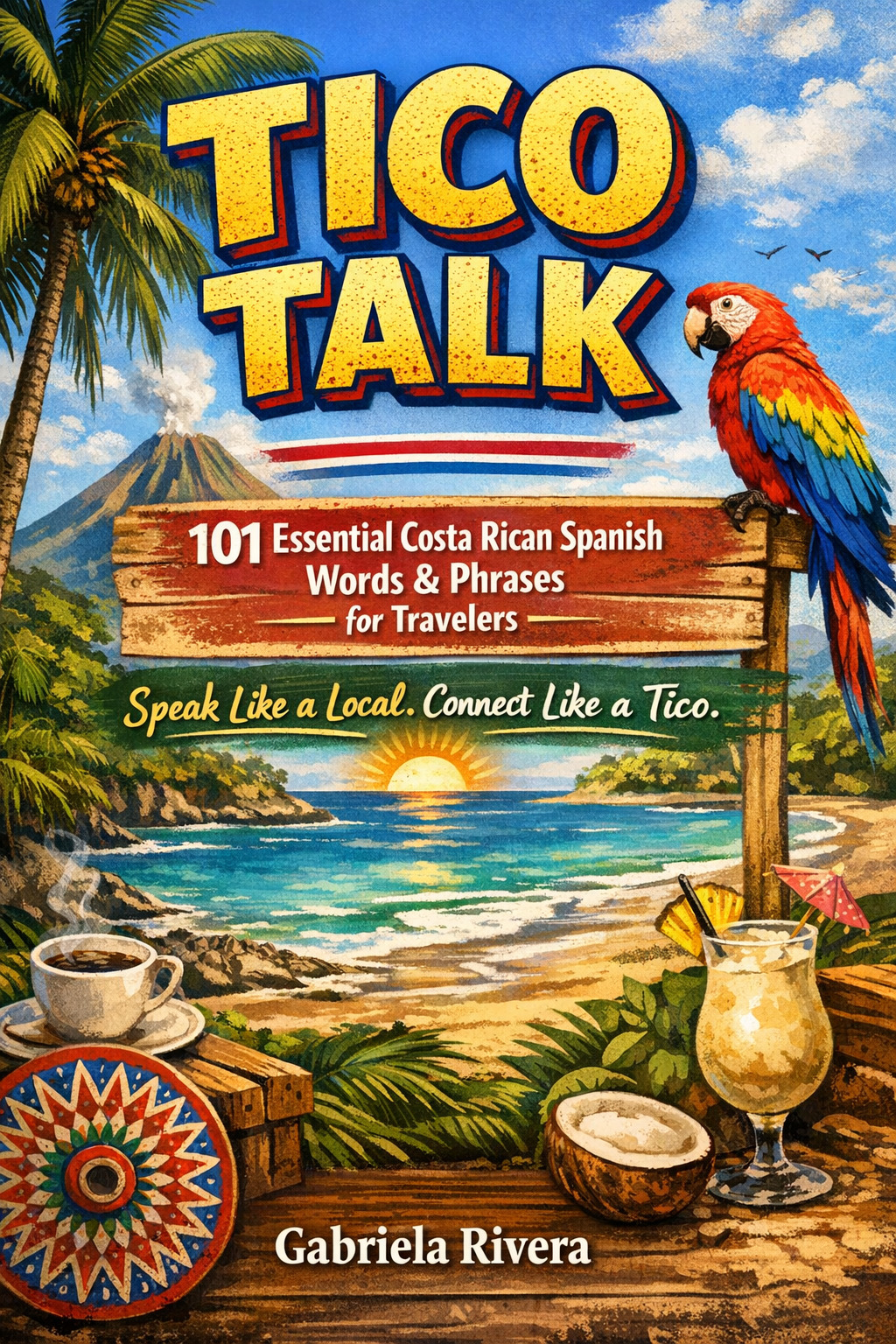
Tico Talk:
101 Essential Costa Rican
Spanish Words & Phrases
The authentic vocabulary of everyday Costa Rica — written by a native Tica who grew up inside the language. Not textbook Spanish. The expressions, slang, and cultural context you will actually use from your first day in the country.
amazon Get Tico Talk — $4.99